
Consultancy built on experience, competence and practical thinking
Our expert Process Safety consultants are available to support the chemical process and associated high hazard industries in identifying hazards, quantifying risk, and delivering compliant safety studies. These are fully compliant with international standards including IEC 61511 (functional safety) and BS EN 61882 (HazOp) and follow established industry best practice. We provide independent, technically rigorous facilitation and review to ensure that risk reduction measures are proportionate, defensible, and capable of withstanding regulatory scrutiny.
Consultancy topics
Alarm Rationalisation
Alarm management is the overarching, continuous process of maintaining and improving an entire industrial alarm system so operators can effectively respond to abnormal situations.
Good alarm management helps maintain process safety, minimizes the chance of incidents, and enhances overall operational reliability.
Alarm rationalization is a specific, core phase within alarm management where every single alarm is systematically reviewed, justified, prioritized, and documented to ensure it has a properly defined operator action.
=Method’s experts can help you to write effective alarm management procedures.
We can also carry out alarm management audits including alarm rationalisation studies.
[top]
Human Factors Risk Assessment
People are at the heart of any system or organisation, so how do we optimise our operations so that people can perform at their best?
The answer is by taking human factors (HF) into consideration. HF applies what what we know about human beings (their abilities, characteristics and limitations) to the design of the equipment they use, the environments in which they function and the jobs they perform. Put simply, the task is to optimise the way people work and interface with work systems and the working environment in order to maximise human performance and minimise the chance of critical errors being made.
=Method’s expert human factors practitioners can help you to carry out a human factors assessment, using tools such as HEART+ (the Human Error Assessment and Reduction Technique). The output from the HEART study can help operating companies to understand what can go wrong on their processes as a result of human error, and what they need to do to reduce the chances of human error and the consequences thereof.
HEART+ can also be used to generate human error rate numbers for use in Layer of Protection Analysis (LOPA).
[top]
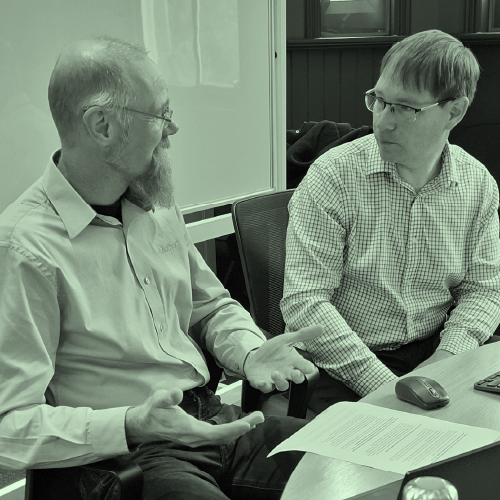
Do It Right, Do It Once.
Ensuring that risk reduction measures are proportionate, defensible, and capable of withstanding regulatory scrutiny
David Sparkes Technical Director Method Functional Safety
Process Safety Auditing
Our Process Safety Auditing services provide independent evaluation of your organisation’s process safety management systems, governance arrangements, and technical compliance.
We assess conformance against recognised frameworks, including COMAH, IEC 61511, and EI 3197 – the Energy Institute’s high level framework for process safety management. Audits examine both documentation and operational reality, checking whether systems are implemented effectively rather than existing solely on paper.
Our audits typically review:
- Process safety management systems and leadership oversight.
- Hazard and risk assessment quality and follow-through.
- Functional safety lifecycle compliance.
- Management of change (MoC) processes.
- Competence and training arrangements.
- Leading process safety indicators (i.e., indicators that look at the inputs to the process safety management system).
- Lagging process safety indicators (i.e., indicators that look at the results of the PSM system, including learning from incidents and near misses).
Each audit delivers a structured findings report with prioritised, risk-based recommendations. We focus on identifying systemic weaknesses, strengthening governance and improving the practical control of major accident hazards.
Our objective is not simply to confirm compliance, but to enhance resilience and reduce the likelihood of high-consequence events. Put simply, a =Method process safety audit will help you to sleep at night, knowing that you’ve taken all necessary measures to keep your people and plant safe.
[top]
Process Safety Management
Our process safety consultants are available to support clients in designing, implementing and strengthening PSM frameworks which prevent process safety incidents and demonstrate compliance with legal requirements and relevant good practice.
Effective process safety management requires a structured, leadership-driven system that integrates hazard identification, risk control, operational discipline, and continuous improvement at each stage of the process safety and project lifecycles.
We support organisations to:
- Develop and enhance Process Safety Management systems.
- Align governance structures with legislative requirements such as COMAH.
- Define clear roles, responsibilities, and accountabilities.
- Establish appropriate process safety performance indicators (PSPI) in accordance with published good practice guidelines.
- Strengthen Management of Change (MoC), contractor control and competence management processes.
- Integrate functional safety lifecycle requirements (e.g. from IEC 61511).
Our approach combines technical depth with practical implementation. Where gaps are identified, we provide structured, proportionate improvement plans. These focus on strengthening barriers, reinforcing leadership oversight and cultural change - embedding process safety into day-to-day decision-making.
The outcome is a robust PSM framework that prevents process safety incidents from occurring and demonstrates compliance with relevant and best practices.
[top]
Need help with a Process Safety challenge?
Start by talking with our team

You don't need to have the solution worked out before you contact us. Tell us about your challenge, and we'll help you understand what you need and how we can help.
- 30-minute discovery. Start a no-obligation conversation with our team to understand your situation, objectives and challenges.
- We'll discuss the most appropriate way forward and the support you need.
- Once we've agreed the scope, we'll provide a clear quotation for the work.