
 Brochure (PDF)
A Practical Guide to Risk Management and Justification
This is a 1-day course intended to help delegates to understand the concept of ALARP (“As Low as is Reasonably Practicable”), and how to use it in risk management, decision making and ALARP demonstration.
Following completion, delegates will be able to apply the ALARP concept in real-life scenarios, using it to make and justify decisions on which risk reduction measures to implement.
Course Content
Module 1: Introduction to ALARP
- What is ALARP?
- Origin and Legal Context (UK HSE and International Relevance).
- Balancing Risk vs the Cost, Time and Trouble to Reduce it.
- The Concept of Gross Disproportion.
Module 2: The ALARP Principle in Risk Management
- Risk Assessment Basics and the Hierarchy of Controls.
- The Importance of Inherently Safer Design.
- ALARP and the “Tolerability of Risk” (ToR) Triangle.
- The Three Regions: Intolerable, Tolerable if ALARP and Broadly Acceptable.
- Relevant Good Practice (RGP).
- The Key ALARP Questions.
- The ALARP Toolkit
- Exercise 1 - ALARP in Everyday Life
Module 3: Applying ALARP in Practice
- Steps in Demonstrating ALARP.
- Constructing a Well-Reasoned Argument.
- What Regulators Want to See.
- Exercise 2 – Constructing a Well-Reasoned Argument.
Module 4: Cost-Benefit Analysis
- Introduction to CBA.
- Benefits.
- Costs.
- Gross Disproportion Factors.
- Exercise 3 – Cost-Benefit Analysis.
- Discounting.
- “Maximum Justifiable Spend”.
- Derivation of LOPA Risk Targets.
Module 5: Practical Aspects of ALARP
- Applying ALARP at Older Facilities.
- “Reverse ALARP”
- Short Plant Life and Temporary Operation.
- A Systems Thinking Approach to ALARP.
- Sensitivity Analysis.
- ALARP Reporting.
Conclusion
Who should attend
Process safety, health & safety and functional safety professionals who wish to understand ALARP and correctly apply it in real life situations.
Pre-qualification
This workshop assumes no-prior knowledge of ALARP. However, it is recommended that delegates have some prior experience of carrying out risk assessments or HazOp studies.
After this course you will be able to:
- Correctly apply the concept of ALARP when carrying out risk assessments.
- Use ALARP decision-making techniques including qualitative assessment and quantitative cost-benefit analysis.
- Use cost-benefit analysis to evaluate whether risks have been reduced to ALARP levels.
- Know what to do if the cost-benefit calculation either passes or fails.
What you will get
- The course material in printed format.
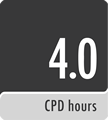
- A certificate of attendance for each delegate that attends the full course. (8 hours of CPD).
Course Options
Classroom

The Course is delivered over 1 day in public classroom sessions.
In-House

The course is delivered at a client's premises as a closed course, and can be customised to suit your needs. Please contact us for more information.
Live Online

The Course is delivered on a single day or as 2 x 4 hour sessions on consecutive mornings.
About the Trainer

David Sparkes
The trainer for this course is David Sparkes. He is Technical Director of Method Process Safety Ltd. He is a chartered chemical engineer, experienced HazOp and LOPA facilitator, a Fellow of the IChemE, and is registered with the IChemE as a Professional Process Safety Engineer (PPSE). David Sparkes' trainer profile.
Price
Click on the specific course dates on this page for pricing information. A quotation can be provided on request.
Course Enquiries
If you have any further questions, please call +44 (0)1462 713313, email support@methodprosafe.com or contact us online. If you wish to proceed, check your diary and reserve a place.
Check your diary and reserve a place




Delegate comments
In course feedback our delegates rated this course 92.9%. See recent comments below, or more comments here.

Recent delegate comments:
I thought the trainer was excellent
Theoretical knowledge much improved
Do it. You will gain more from it thank you think.
Very useful and surprisingly beneficial.
The practical demonstrations and background information were most useful.
David has a great balance of practical experience/stories to make the theory relatable as well as being able to explain topics in different ways if it wasn't clear.
This is how all training courses should be
If you need to get to grips with ALARP in practice, this is for you.
I feel I now have a good understanding of the requirements to demonstrate ALARP
[I learned] the foundation of where Cost-Benefit Analysis fits into ALARP and how Relevant Good Practice must be followed regardless
Challenges general thinking.
David was really good, explaining everything well and was very engaging to listen to
Thanks again for a very worthwhile course.
Very good course which give a good understanding of ALARP and the requirements to demonstrate it
I'd recommend this course for someone with background in hazard studies...it's the next step after a HAZOP or LOPA
Read more comments.
Share this course page with a colleague using your preferred links below: