What Are Hazard Studies 4, 5 and 6?
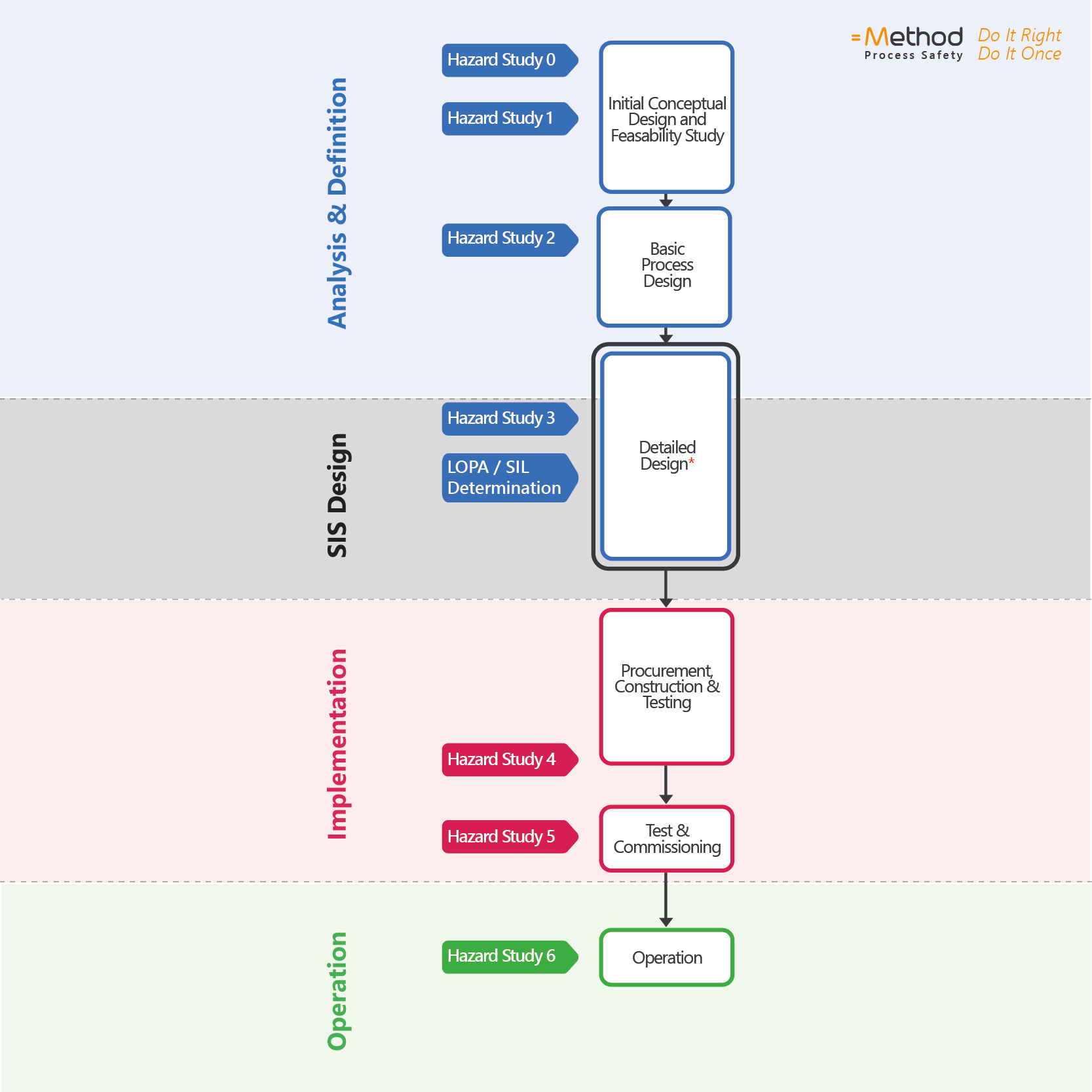
Hazard studies 4, 5 and 6 may have different meanings in different companies, but commonly:
Hazard Study 4
Hazard study 4 is completed at the point of handover from the construction team to the commissioning team, and is designed to ensure that the plant has been installed correctly. These checks involve walking every line to check against the piping and instrumentation diagrams (P&IDs) that equipment has been installed in the correct locations and orientation, that joints have been fully tightened and that pipework is properly supported. The physical layout of the plant is also checked – for example making sure that valve handles are accessible and escape routes have not been blocked.
Hazard Study 5
Hazard study 5 is commonly completed after water trials, but before any hazardous chemcials are introduced into the process. HS5 is usually a checklist-based approach. It ensures that actions from the earlier hazard studies have been completed and that any issues found during hazard study 4 and the water trials have been addressed, and the plant is ready for use with chemicals.
Hazard Study 6 For New Processes
Once the process is up and running, the plant operation is evaluated to make sure everything is operating as intended. This is best done before the technical commissioning team (e.g. chemists and process engineers) is disbanded to hand over for normal running.
The focus of this initial production review is to check that the plant is operating as expected. For example, if safety trips are being called upon more frequently than the designers expected, this indicates that the process is not fully under control.
Hazard Study Revalidation
Best practice is to carry out hazard study revalidation on a five-yearly cycle. This is an opportunity to review how the plant is operating, and if anything has changed or needs to change. Typically the previous hazard studies and action responses are reviewed, along with management of change documents, to make sure the hazop and P&Ds have been kept up to date. Incidents and near misses are also reviewed to see if any corrective actions are needed.
What =Method can do for you
Help you to devise a strategy for process safety management throughout the whole lifecycle of your production plant.
Provide experienced study facilitators for hazard studies 4, 5 and 6, or periodic revalidation.
Train and give mentoring support to aspiring hazard study leaders .
Provide training for HazOp team members .
Technical author
David Sparkes
Technical Director, Method Process Safety
David is an experienced process engineer with a solid background in plant support, capital projects and control system design.